Blog & Papers

AI Remembers You—Why Does It Still Fail to Understand You?

AI Remembers You—Why Does It Still Fail to Understand You?

How Long-Term Memory Becomes an Updatable Decision System

Long-term memory in AI Agents is state infrastructure, not simple retrieval. This post outlines an end-to-end architecture that converts scattered signals into traceable evidence and updatable states. By compiling task-specific context and closing the feedback loop with data lineage, agents move beyond merely remembering history to continuously making better decisions over time.

2026.08.17Memory
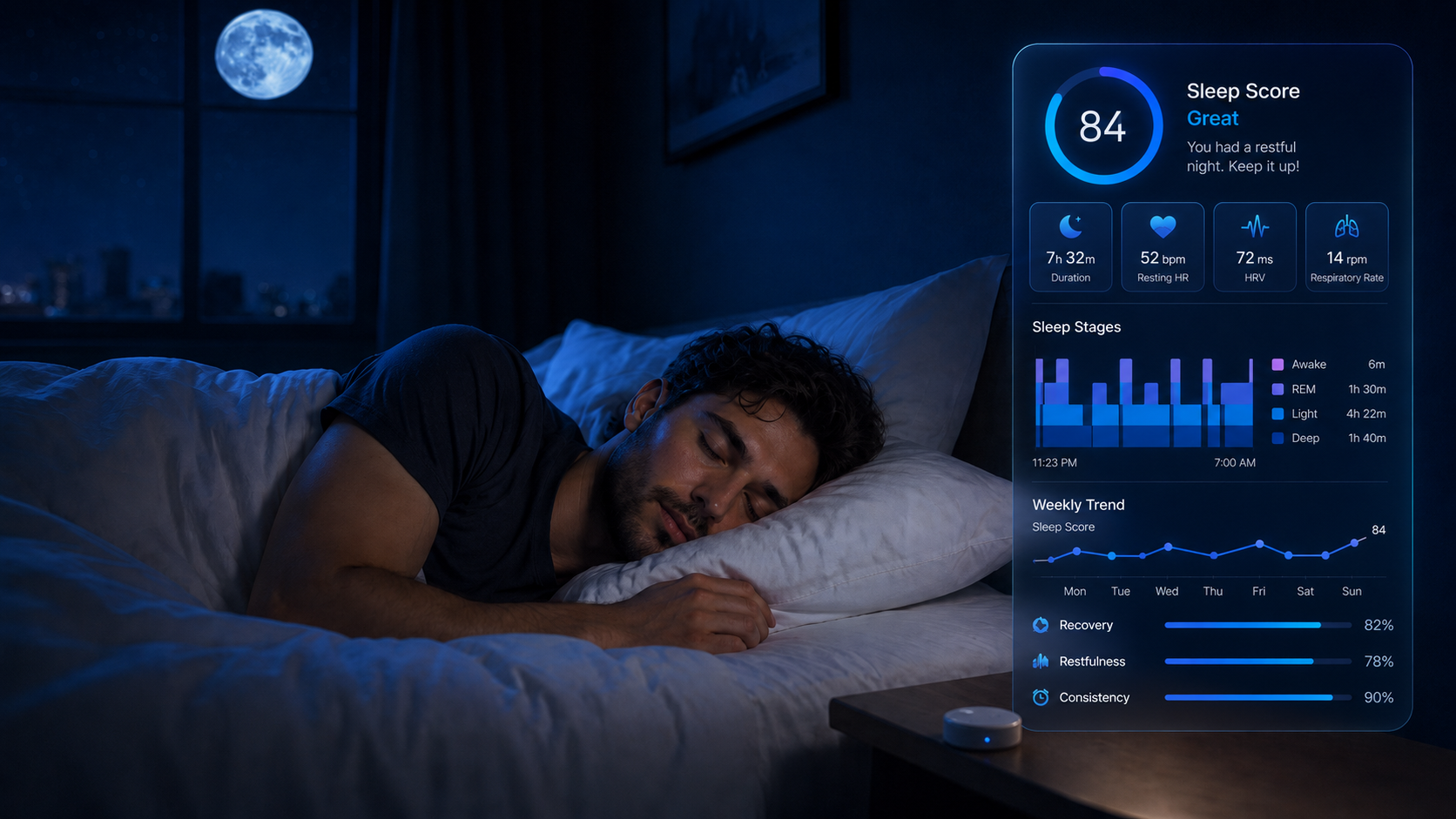
Research visual for Speediance AI long-context sleep report generation

Long-Context Open-Ended Sleep Report Generation: Challenges and Training Solutions

How can a model read weeks or months of sleep records, identify the right facts, explain possible causes, and recommend safe actions a user can follow

Why can someone still feel tired after 7.5 hours of sleep? Finding important patterns across weeks or months of sleep records, explaining what may drive them, and turning findings into safe, personal actions: challenges and a training pipeline with reasoning graphs, weighted DPOP, and fine-grained GRPO.

2026.07.17Research
Illustration of Speediance AI training plan and intelligent fitness systems

Inside AI-Powered Training 01

Why Building a Training Plan Is Harder Than It Looks

The core challenge of AI training planning isn't being "smart," but constraint management—the complex interplay between equipment capabilities, training goals, recovery needs, and scheduling. Moving from "train with what you have" to "train with what's suitable," AI must find balance at the intersection of constraints: same goals require different approaches with different equipment, adjacent training days have invisible recovery chains, and week-over-week progression cannot rely on cutting rest. The real challenge is translating exercise science principles into constraint solving.

2026.07.10AI Agent
Concept visual for Speediance AI health operating system and CARE Loop

We Have More Health Data Than Ever. So Why Aren’t We Healthier?

Wearable devices surge but diabetes prevalence doubles; data explosion hasn't improved health. Health is fundamentally a behavioral system—we lack "doing," not "knowing." The CARE Loop (Collect-Analyze-Recommend-Execute) lowers action barriers to drive natural behavior. True AI health intelligence should be a continuously running "health operating system," helping users consistently do what they know but struggle to maintain. The future belongs to systems that drive behavioral change.

2026.06.22AI Strory
All posts loaded
Blog & Papers | Speediance